
The Quick Guide To Every Major Decorating Style
The amazing thing about interior decorating and design is the multitude of creative possibilities
that a room holds. Rooms aren’t just empty vessels to be filled with furniture and decor. When
done right, they tell stories and they express different aesthetic sensibilities. Different spaces
exude so many different vibes. Styling a home is literally creating a personality(usually the
homeowner) and bringing it to life. Over time people from different places and times have
more or less come to agree on what is and what isn’t a good look for the interior of a home.
From this, numerous design styles have emerged and there is a look for every home, every life,
and every eye. But there are those styles that continue to stand out whether because they are
timeless, or because they are so easily updated and adapted to remain either modern or
contemporary. On the other end of the spectrum some styles are so specific or so nondescript
they have no style name at all. Below is an introduction to 10 popular design motifs.
01 Modern Farmhouse Style
(Image Credit: Honestly WTF)
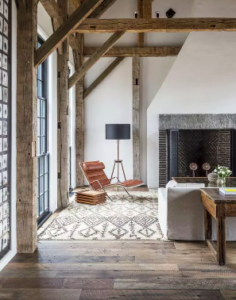
A bit rustic, a bit old fashioned this style stands at the perfect intersection of timeless
and easily updateable. Its main elements are exposed wood beams, brick fireplaces
and rough hewn surfaces. Modern Farmhouse is a casual, relaxed non pretentious style
that can easily be brought into a modern aesthetic. This style has a fuss free earthy feel
that can be modernized with a geometric Moroccan rug and a modern standing lamp as
pictured below. The patterned brick interior of the fireplace is another nice touch that
lends a contemporary air to this rustic space.
02 Mid-century Modern Style
(Image Credit: Studio Mcgee)
Even as we draw close to the end of the first two decades of the 21st century,
mid-century modern style continues to be one of the most popular ways to decorate a
room. Developed, as the name implies toward the middle decades of the 1900’s, the
style was a minimalist turn away from the more ornamented style of the Art Deco period
that came before it. The style was pioneered by designers such as Ray and Charles
Eames and it has proven to be much more than a design style as it encompasses a
number of unique furniture styles, including the iconic Eames Lounge Chair.
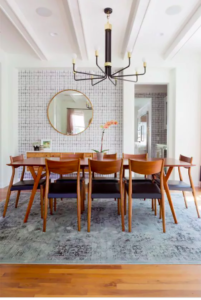
In this dining room the table, the chairs and even the wall mounted console all belong to
the mid-century period. The style is characterized by streamlined pieces in warm wood
tones and an understated aesthetic whose popularity shows no signs of slowing down.
03 French Country Style
(Image Credit: How to Decorate)
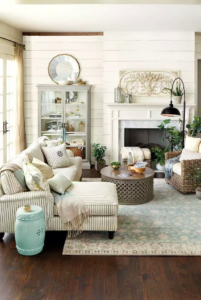
French Country is one of the more traditional approaches to interior design and it
continues to inspire homeowners with its elegance and sophisticated style. Another
rustic style, this one originated in the hills of France which is characterized by its
ornamental flourishes-particularly in the lighting. This style is also marked by traditional
patterns and willingness to embrace asymmetry in the form of mismatched furniture and
the ornamental piece seen in the photo above.
04 Industrial Style
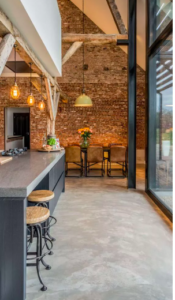
Industrial style design is characterized by raw surfaces like exposed brick and iron work,
stone or concrete floors and an open plan approach to space. The key to industrial
design is finding the sophisticated aspect to balance out the raw spaces. In this
example the balance comes in the form of the subtle juxtaposition of textures between
the floors, brick walls and exposed wooden supports. At the bar, a smooth,
straight-edged stone bar top is softened by classic-looking bar stools with curved metal
legs. As a finishing touch a delicate element is brought in with flowers to prevent the
space from looking too harsh and cold.
05 Mediterranean Style
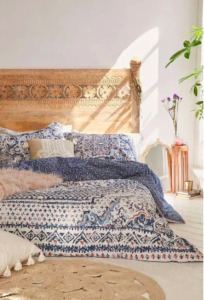
(Image Credit: Icon’s Corner)
Mediterranean style is a mix between some ornamentation and some relaxed rustic
elements. From a color perspective this style is essentially a beach motif so a lot of
blues, warm browns and whites are used as the sun, sea and sand are the main
influences of this style. The combination of warm and cool colors creates a laid back
look and often can translate into a resort like feel.
In this bedroom, the above mentioned colors set the tone. Other natural materials are
used in this room such as the handmade jute rug and strong patterns in the bedding
and headboard round out the style. Most people assume this style influence includes
only Southern European countries when in fact the Mediterranean sea touches on
Africa from Morocco to Egypt as well as several points in the Middle East. For this
reason, the range of cultural influences to draw on is vast, which helps to create a
worldly, sophisticated look for your space.
06 Art Deco Style
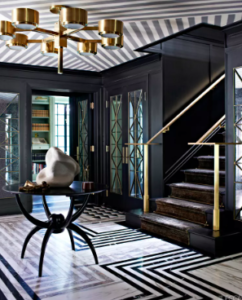
(Image Credit: Royalty Times)
Short for Art Decoratifs, the style was created in response to the boom of prosperity that
the US experienced at the turn of the 20th century. The Art Deco style lasted throught
he Great Depression before becoming what would be eventually known as mid-century
modern style.
At its height, the Art Deco Style was quite a wonder to behold. It not only encompassed
interior design but architecture, painting and sculpture as well. The photo exemplifies
Art Deco at its best: bold geometric patterns cover nearly every surface of the room
accented by elaborate lighting fixtures, innovative furniture designs and a lot of
metallics-especially gold. While this style was eventually denounced as being overly
ostentatious-quite understandably since what followed was a massive depression
bookended by a set of world wars. This style will however remain one of the worlds
great iconic moments of art and design.
07 Modern Japanese Design
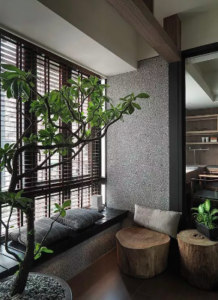
(Image Credit: SiteHouse)
Many of the elements that characterize traditional Japanese design have been adopted
in modern U.S. design as well. For example, a tendency towards minimalism, an
appreciation of streamlined furnishings and the inclusion of natural elements, from
stoneware to standing plants. This room displays the sense of minimalism and quiet
serenity that is the hallmark of a Japanese approach to decor.
08 U.S. Beach Style
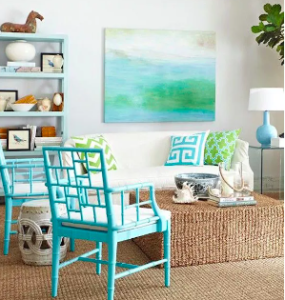
(Image Credit: Ruby Deco)
Similar to the Mediterranean style, the main influence on this style is the beach itself.
Blue shades of the sky and surf are usually found alongside varying neutral tones of
different kinds of sand. This style diverges a bit as shown in the photo with its cultural
references, so the ornate tile patterns and handmade furnishings of Mediterranean style
are replaced by Thomas Chippendale chairs and colorful geometric pattern pillows
(minus the Greek Key pillow which is sporting a Mediterranean pattern).
09 Vintage Style
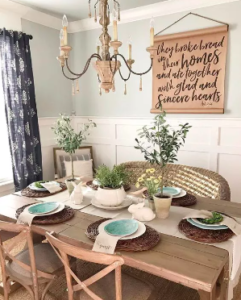
(Image Credit: Our Vintage Nest)
Vintage style is exactly what it sounds like-an eclectic combination of vintage and
antique pieces that creates a comfortable, homey feel. This dining room is a perfect
example of a nostalgic, vintage space, right down to the mismatched seating around the
table, the antique chandelier and the old fashioned affirmation artwork hanging on the
wall.
10 Global Style
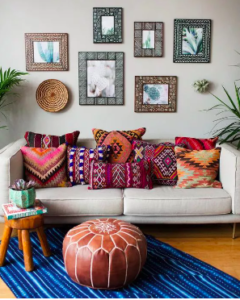
(Image Credit: Alyse Studio)
Global style can be a bit tricky. While it is often confused for boho or simply eclectic
styles in which a variety of disparate pieces are put together in a single room, creating a
truly global home style requires a more thoughtful interaction with culture to create
rooms with a story to tell. Because a global space can be so many things, it’s difficult to
pinpoint the style down to a few key elements. To avoid cultural appropriation, the
context and significance of pieces need to be considered when using elements from
other cultures. There should be some care taken when choosing items, to ensure
ethical and affordable sourcing.
This living room does a good job of encompassing color and pattern as seen in the rug
and pillows. An emphasis on textiles is also a common element of global spaces.
However, the most important element is always the blending of cultures that makes the
room truly a global space. In this space, a Moroccan pouf sits alongside a couch filled
with pillows in Chinese Hmong and Suzani patterns. Topping it all is a gallery wall of
frames etched in Kuba and Ndop patterns.